The most practical way to improve focus is to change the small habits that keep breaking it: where your phone sits, how often you jump between tasks, and whether you protect time for one thing at a time. Every distraction runs on the same Habit Cycle of Trigger, Craving, Action, and Reward. Once you can see that cycle, you can redesign it one step at a time.
Why it is so hard to improve focus today
You sit down to write a report. Two minutes later, your phone buzzes. You glance at it, see a message, answer it, and then check one more app "just quickly." Ten minutes are gone, and the report still has one sentence.
That pattern says more about your setup than your character. Your day is full of cues built to grab your attention: badges, pings, banners, and open tabs. Each one is small. Together, they train you to break off from hard work over and over.
Research on office work shows how costly this can be. In one study, people who were interrupted while working finished their tasks faster than you might expect, but they reported more stress, frustration, and time pressure [2]. In other words, they kept up by pushing harder, and it wore on them.
The good news is that distraction follows patterns. And patterns can be changed.
Distraction is a habit with a Habit Cycle
A habit is a behavior your brain runs on autopilot when it sees a familiar cue in a familiar setting. Researchers who study habits have found that many daily actions are triggered by context, such as a place, a time, or a sound, more than by a conscious choice [5].
Phone checking is a near-perfect example. Here is how it maps to the Habit Cycle:
- Trigger: A buzz, a lit screen, a pause in your work, or the moment a task gets hard.
- Craving: A pull toward something new or easy. This is the brain's anticipation signal, the feeling that something interesting might be waiting.
- Action: You pick up the phone, open an app, or switch to your inbox.
- Reward: A quick hit of novelty, relief from the hard task, or a small social connection.
Each time this cycle runs, it gets a little stronger. That is why "just trying harder" so often falls short. A better plan is to change each part of the cycle on purpose. If you want a deeper look at the four steps, see the TCAR Method.
Fix 1: Move the phone out of reach
The first trigger to tackle is usually your phone. You might think a silent phone is harmless. But in one set of experiments, people whose phones were in another room did better on attention-heavy tasks than people whose phones were on the desk, even face down and silent [1]. Just having the phone nearby seemed to use up some mental room.
Try these changes:
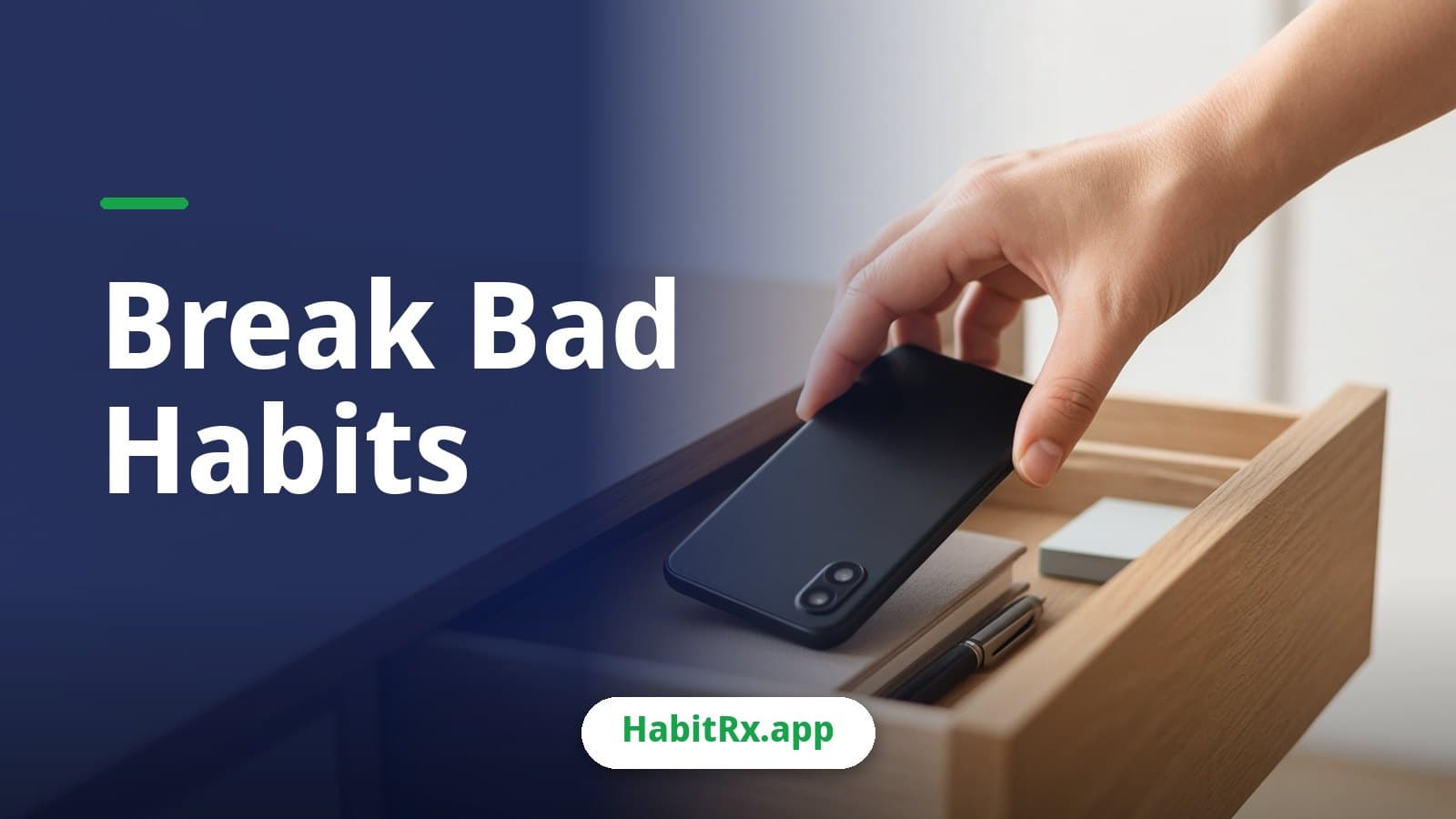
- Change the location. Put your phone in a drawer, a bag, or another room during focused work. A shelf behind you is better than the desk in front of you.
- Cut the cues. Turn off all but the most important notifications. Remove badges from social and news apps.
- Add friction. Log out of distracting apps on your laptop, or move them off your home screen. One extra step is often enough to break the automatic reach.
You are not banning your phone. You are removing the trigger so the cycle never starts.
Fix 2: Cut down on task switching
Many of us believe we are good at multitasking. In practice, most "multitasking" is rapid switching between tasks. Lab studies show that every switch costs a little time while your mind reloads the rules of the new task, and the cost grows as tasks get more complex [3].
There is also a hidden cost. When you leave a task unfinished and jump to another, part of your attention can stay stuck on the first one. One researcher called this "attention residue" and found that people with more of it did worse on the next task [4].
To switch less:
- Batch shallow work. Check email and messages at set times, such as 10 a.m., 1 p.m., and 4 p.m., instead of all day.
- Leave a note for yourself. Before you stop a task, write one line about where you are and what comes next. This helps your mind let go.
- Keep one window open. Close tabs that have nothing to do with the task in front of you.
Fix 3: Build single-tasking blocks
A single-tasking block is a set stretch of time where you do only one task. It is one of the simplest ways to improve focus, because it gives your brain one clear job.
Here is a simple setup:
- Pick one task before the block starts. Make it specific, such as "draft the intro of the report," not "work on report."
- Set a timer for 25 to 50 minutes. Short blocks are easier to start.
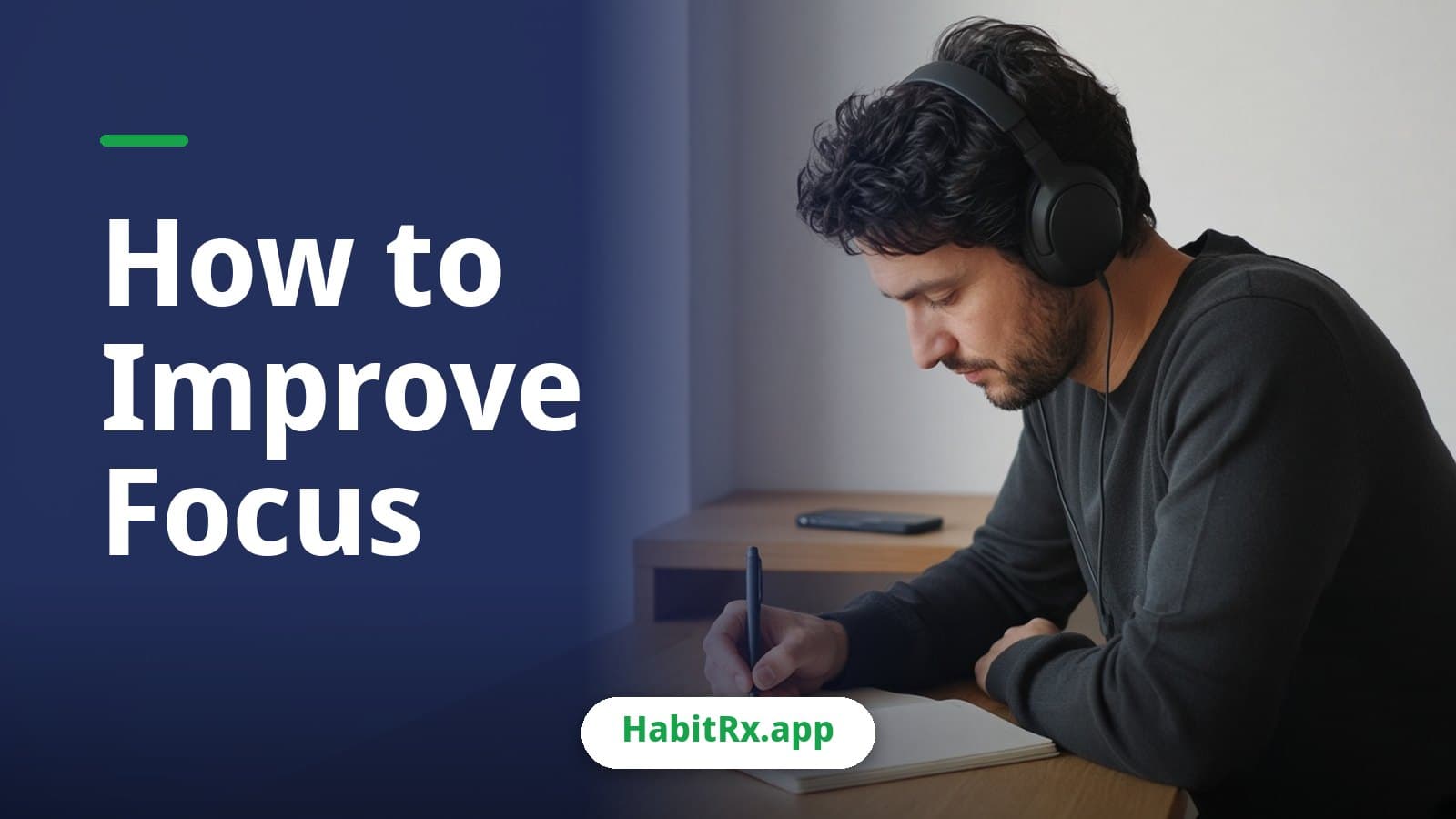
- Prepare your space. Phone away, headphones on if it helps, water nearby.
- Take a real break when the timer ends. Stand up, stretch, look out a window.
Use an if-then plan
An if-then plan, also called an implementation intention, links a specific situation to a specific response. For example: "If it is 9 a.m. on a weekday, then I put my phone in the kitchen and open my most important task." A large review of 94 studies found that people who made if-then plans reached their goals more often, on average, than people who only set goals [6].
You can also plan for the hard moment: "If I feel the urge to check my phone during a block, then I write the urge on a sticky note and keep going."
Ride out the urge to check
Even with a good setup, the craving will show up. You will hit a tricky paragraph and feel the itch to escape. This is normal, and it is the moment that matters most.
One helpful skill is called urge surfing. It means noticing a craving, watching it like a wave, and letting it pass without acting on it. Researchers have tested it as a brief mindfulness practice, for example with college students trying to resist the urge to smoke [7]. The idea is simple: many urges rise, peak, and fade within minutes if you do not feed them.
To try it:
- Notice the urge and name it in your head: "There is the pull to check."
- Take three slow breaths and notice where you feel it in your body.
- Return to the next tiny step of your task, such as writing one more sentence.
Over time, the craving loses some of its grip because it no longer leads to the reward.
A worked example: the inbox habit
Meet Dana. She is a project manager who wants to improve focus during her mornings. Every time she starts a planning document, she ends up in her inbox within five minutes.
Here is how Dana maps her Habit Cycle:
- Trigger: The planning doc feels vague and hard to start.
- Craving: She wants the easy feeling of "getting something done."
- Action: She opens email and answers a few quick messages.
- Reward: Small wins and relief from the hard task.
Her fixes target each step. She breaks the doc into a first step, "write three bullet points," so the trigger feels smaller. She closes her email app before 10 a.m. and sets an if-then plan: "If I feel stuck, then I write the next bullet, even a bad one." For a reward, she checks one item off a paper list at the end of each block.
After a couple of weeks, Dana notices that the pull to check email still shows up, but it is quieter, and she gets through most of her morning blocks.
Make your focus habits stick
New habits take time to feel automatic, and the timeline varies a lot from person to person. Expect weeks, not days, and expect a few rough ones along the way. A missed block is a normal part of learning, so go easy on yourself and start again the next day.
A few tips to keep going:
- Start small. One 25-minute block a day is enough to begin.
- Keep the same time and place. Stable context helps habits form [5].
- Track your blocks. A simple tally on paper shows progress and adds a reward of its own.
- Adjust, do not quit. If a fix is not working, change one part of the cycle and try again.
If you want to see which part of your Habit Cycle is weakest, try the free Habit Cycle Score. And if you would like to go deeper into how habits form and change, Dr. Gupta's book The Science of Habits explains the Habit Cycle with everyday examples.
If your attention problems feel severe or are affecting your work, school, or relationships, it is worth talking with a qualified professional.
Small, steady changes to your triggers, your switching, and your work blocks are what help you improve focus over time. Pick one fix from this list and try it tomorrow morning.