When it comes to willpower vs systems, systems usually come out ahead because they change your situation so you need less self-control in the moment. Willpower is the effort you use to push past an urge. A system is a set of cues, plans, and rewards that makes the helpful action the easy default, so you are not starting from zero every day.
Willpower vs systems: what the difference really is
Willpower is in-the-moment effort. You feel a pull toward one thing, like checking your phone, and you force yourself to do something else, like finishing an email. It can work, but you have to show up and win that same fight every time.
A system is a plan you set up ahead of time. It decides where things go, what you do when a certain moment arrives, and how you notice progress. Once it is in place, it keeps working even on days when you feel tired or unfocused.
Here is a simple way to compare the two:
- Willpower reacts to the urge after it shows up. A system shapes the moment before the urge arrives.
- Willpower depends on your mood, sleep, and stress that day. A system is built to work on your bad days too.
- Willpower handles each choice as a new decision. A system turns the choice into a routine.
At heart, the willpower vs systems question is about where you put your effort. Effort spent building a system pays off again and again. Effort spent resisting an urge gets used up in one moment.
Why leaning on willpower alone is a shaky plan
You have probably felt this. In the morning, your plan seems easy. By 9 p.m., after a long day, the same plan feels impossible. Willpower is most needed at exactly the moments when you feel least able to use it.
For years, a popular idea called "ego depletion" said that self-control works like a fuel tank that runs low with use. Some early studies supported it. Later, a large replication run across more than 20 labs found an effect close to zero [1]. So the evidence on the fuel-tank idea is mixed, and it is wise not to build your habits on it.
You do not need the fuel-tank theory to see the problem, though. Willpower changes with how you feel, and you cannot control how you feel every day. That alone makes it a shaky base for anything you want to repeat for months.
Research on habits points in a helpful direction. Wendy Wood and Dennis Rünger describe habits as links between a context and a response, learned through repetition and reward [2]. Their review also suggests that people who seem to have strong self-control may rely more on good routines than on constant resisting. In other words, they have built systems, whether they call them that or not.
How a system works through the Habit Cycle
At HabitRx, we use the Habit Cycle to map any habit: Trigger, Craving, Action, and Reward. A good system plans for each part, so willpower is only a backup.
Trigger: design your cues
Triggers are the sights, places, times, and feelings that start a habit. Because habits are tied to context [2], changing your space is one of the strongest moves you can make. Put the guitar on a stand in the living room. Keep the phone in a drawer during work. Make the cue for the habit you want obvious, and hide the cue for the habit you don't.
Craving: plan for the pull
Cravings are the brain's anticipation signal, a quick prediction that something will feel good. Instead of fighting a craving head-on, you can ride it out. Researchers who study "urge surfing," including Sarah Bowen and Alan Marlatt, teach people to notice an urge the way you might watch a wave [3]. Many urges rise, peak, and fade within minutes, especially if you do not feed them.
Action: decide in advance
An if-then plan, also called an implementation intention, links a specific situation to a specific action. Peter Gollwitzer showed that simple plans like "If it is 8 a.m. on a weekday, then I go for a ten-minute walk" help people follow through [4]. A later review of 94 studies found a medium-to-large average effect on reaching goals [5]. The choice is already made, so there is nothing to argue with yourself about.
Reward: make progress visible
Rewards teach your brain what to repeat. One reward that is easy to build in is seeing your own progress. A review of experiments found that monitoring progress toward a goal helped people reach it, and the effect tended to be larger when progress was written down or shared with others [6].
Five building blocks of a system that beats self-control
You can turn the Habit Cycle into a simple system with these five pieces:
- One clear habit. Pick a single behavior to start, not a whole life overhaul.
- A cue in the right place. Change your space so the trigger for the new habit is easy to see and the trigger for the old one is harder to reach.
- An if-then plan. Write it down: "If [moment], then I will [small action]."
- A tiny first step. Make the action so small it is hard to skip, like two pages or two minutes.
- A visible tracker. Use a paper calendar, sticky notes, or a simple chart, and mark each day you follow the plan.
Add one more rule: when the system fails, fix the system, not your character. If you keep skipping the plan, the cue may be in the wrong place or the first step may be too big.
A worked example: checking your phone during work
Jordan wants to stop checking his phone every few minutes while he works. His willpower plan is "Just don't touch it." By midmorning, he has checked it twenty times and feels frustrated.
Here is Jordan's Habit Cycle:
- Trigger: A small pause in his work, like waiting for a file to load.
- Craving: A pull toward something new and interesting.
- Action: Unlocking the phone and scrolling.
- Reward: A quick hit of novelty.
Now Jordan builds a system:
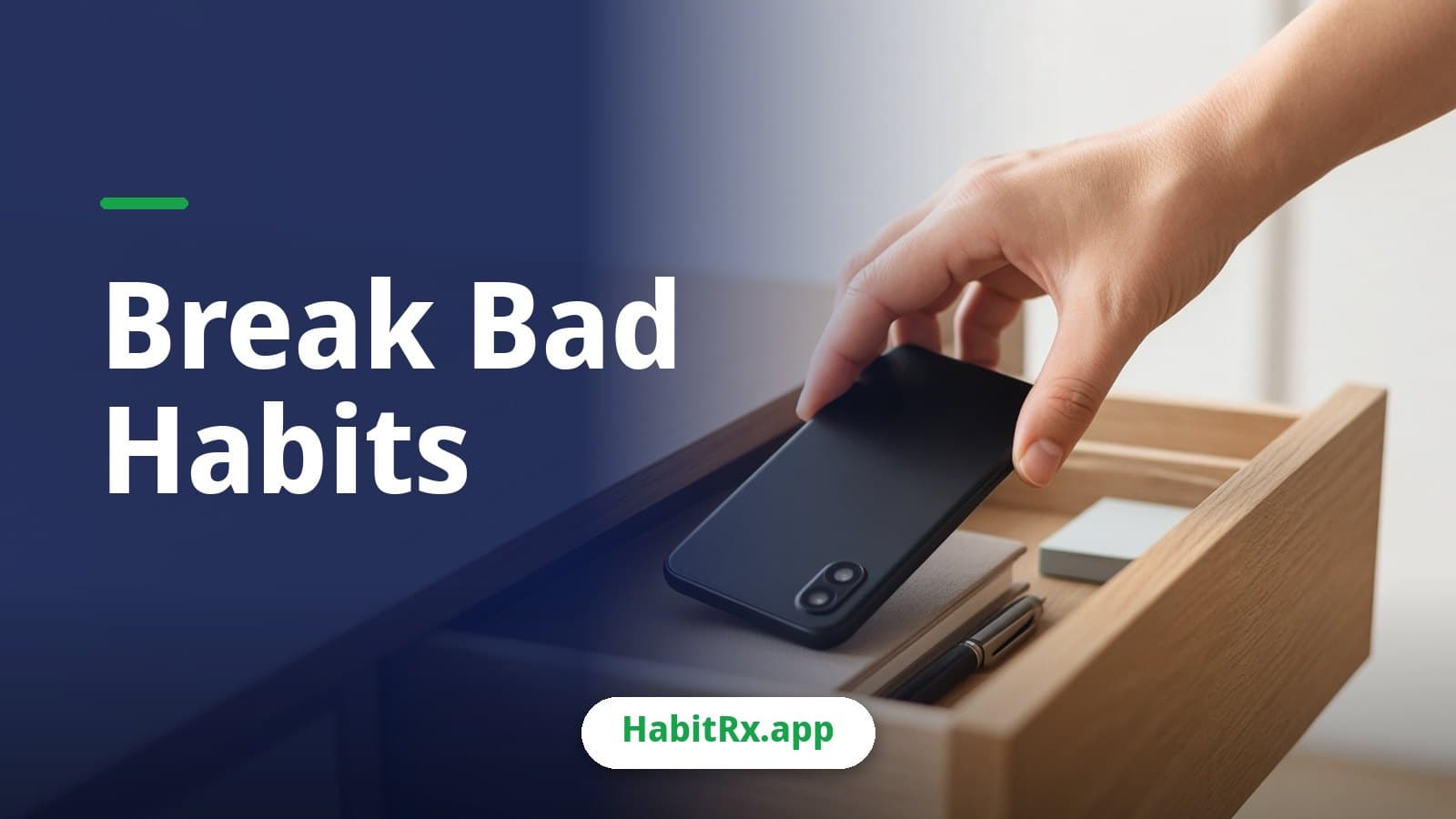
- He puts his phone in a desk drawer with notifications off from 9 a.m. to noon.
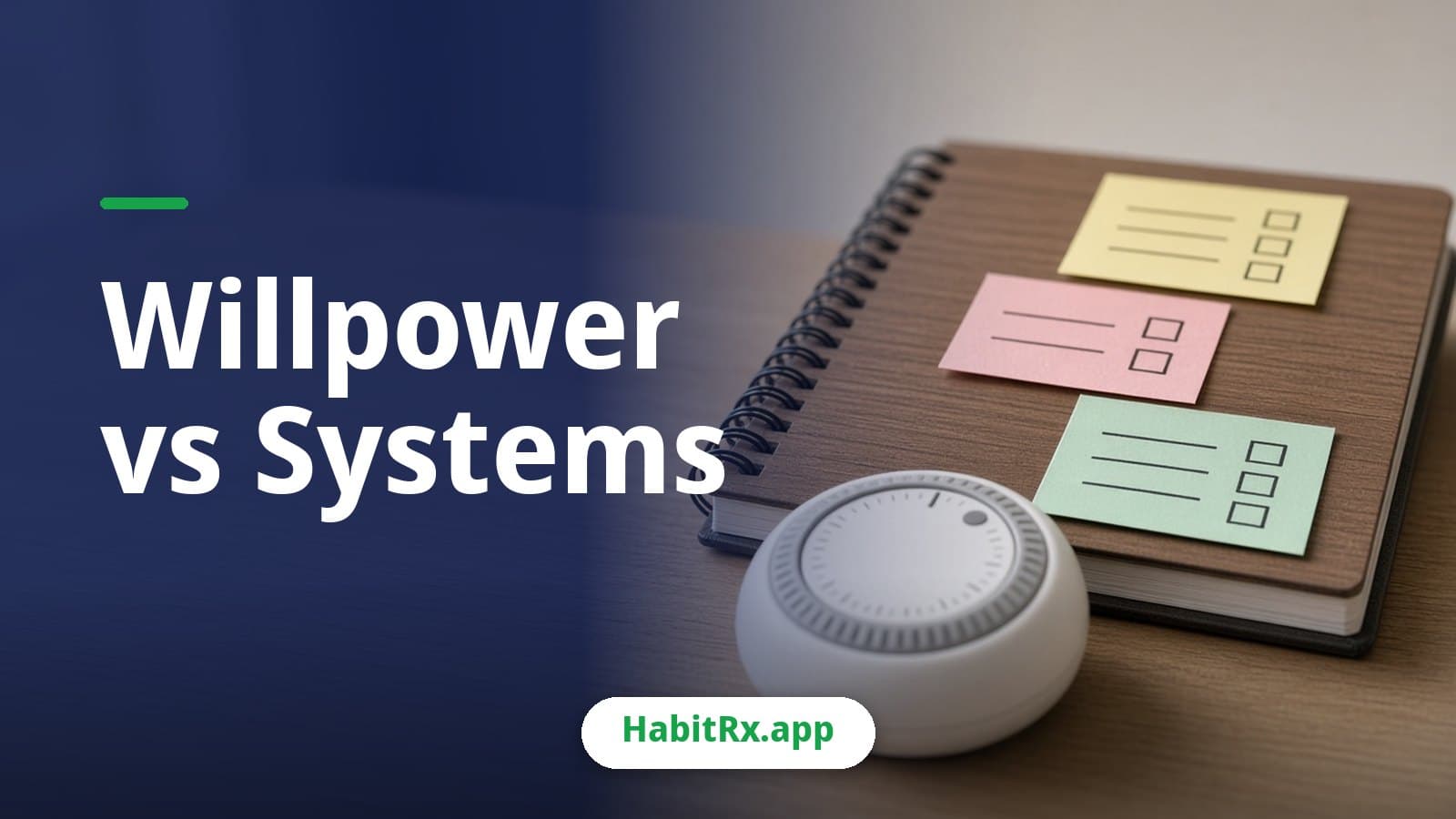
- He writes an if-then plan on a sticky note: "If I feel the urge to check my phone, then I stand up, stretch, and take three slow breaths."
- He sets a small kitchen timer for 25 minutes. When it rings, he may check his phone for two minutes.
- He marks each completed work block on a weekly plan taped by his screen.
Jordan still feels the urge. The difference is that he no longer has to win a fresh argument each time. The drawer, the plan, and the timer do most of the work.
Where willpower still fits
Willpower is still part of the picture. You use it to set the system up: to decide on a plan, move the phone, write the sticky note, and try again after a slip. Think of willpower as the spark that starts the engine and the system as the engine itself.
This is also why it helps to know your own patterns before you build. The free Habit Cycle Score can show you which part of the cycle tends to trip you up, so you know where to put your effort first.
How long until the system runs on its own
Habits take time to settle in. In a study by Phillippa Lally and colleagues, people repeated a new daily behavior in the same setting. The time it took for it to feel automatic ranged from 18 to 254 days, with a median of about 66 days [7]. Missing one day did not seem to throw people off track.
So the willpower vs systems choice is also a choice about patience. A system lets you keep showing up long enough for the habit to stick. For a fuller guide to building habits that last, Dr. Gupta's book The Science of Habits explains the process step by step.